
Review (PDF) Hitchcock's Music
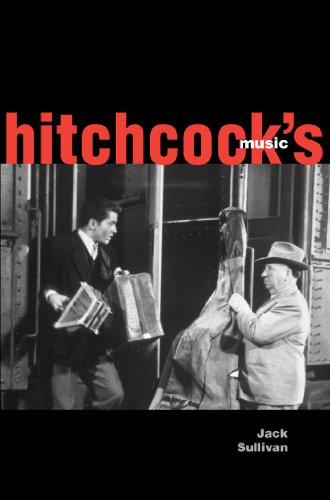


For half a century Alfred Hitchcock created films full of gripping and memorable music. Over his long career he presided over more musical styles than any director in history and ultimately changed how we think about film music. This book is the first to fully explore the essential role music played in the movies of Alfred Hitchcock.Based on extensive interviews with composers, writers, and actors, and research in rare archives, Jack Sullivan discusses how Hitchcock used music to influence the atmosphere, characterization, and even storylines of his films. Sullivan examines the director’s important relationships with various composers, especially Bernard Herrmann, and tells the stories behind the musical decisions. Covering the whole of the director’s career, from the early British works up to Family Plot, this engaging look at the work of Alfred Hitchcock offers new insight into his achievement and genius and changes the way we watch—and listen—to his movies.

File Size: 3970 KB
Print Length: 377 pages
Publisher: Yale University Press (December 1, 2006)
Publication Date: December 1, 2006
Sold by: Digital Services LLC
Language: English
ASIN: B0015MTOQ8
Text-to-Speech: Enabled
X-Ray: Not Enabled
Word Wise: Enabled
Lending: Not Enabled
Enhanced Typesetting: Enabled
Best Sellers Rank: #1,600,591 Paid in Kindle Store (See Top 100 Paid in Kindle Store) #84 in Books > Humor & Entertainment > Sheet Music & Scores > Composers > Sullivan #391 in Books > Humor & Entertainment > Sheet Music & Scores > Forms & Genres > Musicals #391 in Books > Humor & Entertainment > Sheet Music & Scores > Historical Period > Modern Popular

Probably the most memorable musical sound in cinema is the slashing strings of the shower scene in _Psycho_, a supreme example of how music can heighten image. It isn't too surprising that the example should come from a Hitchcock film; over the past two decades, critics and academics have paid increasing attention to how Hitchcock used music because he was so good at doing so. In _Hitchcock's Music_ (Yale University Press), Jack Sullivan, a professor of English and of American studies, has given a guide to the music (or frequently, silence) in all of Hitchcock's sound films, with stories about Hitchcock's work with composers and how soundtracks became formed as particular pictures progressed. Sullivan knows the films better than almost all of his readers will, and while much of Hitchcock's music is memorable, Sullivan writes of it in such detail that even Hitchcock fans will find themselves wishing that they had instant recall of each particular phrase or tune. I myself went back to listen to the early talkie _The 39 Steps_ after reading Sullivan's chapter about it, because although I have seen the movie many times, I could not remember the music or how important it was to the plot of the film. This then is a wonderful reference book, and it will drive Hitchcock fans back into their DVDs to attend to the master with new ears.Sullivan begins, of course, with Hitchcock's first picture after his silent days, _Blackmail_. Hitchcock used the music in this initial film the same way he would use it throughout his career, like using a harp for a demonic sequence (when harps are usually angelic) and using cheerful music as an irony to what is being shown on the screen. Using a musical tune as an important part of the plot is one of Hitchcock's many tricks.
If you're a Hitchcock fan, you already know how well Hitchcock used music in his films. Hitchcock was the ultimately leader/collaborator--he knew what he wanted for his films and had a strong instinct which collaborators would do the best job of bringing their talent to his films. His work with Herrmann is celebrated but he worked well with other film composers as well. When Hitchcock's instincts betrayed him (as the author of this book points out) it's usually because his commercial instincts took the lead over his artistic ones; "Torn Curtain" a flawed Hitchcock film with a number of marvelous set pieces would have been much improved with the original music that Bernard Herrmann composed. Hitchcock fired Herrmann when he didn't deliver a commercial score with a hit song or melody that could pull in a lucrative profit. Sullivan also accurately points out that while Hitchcock was great at collaboration he ultimately was THE boss and would get rid of things he felt didn't fit in with his decisions (right or wrong) for a film.Hitchcock at his best (as Sullivan accurately points out) knew the impact of music to enhance a film not distract from it. Once Hitchcock had control of his films, he pushed the various composers he worked with (from Steiner, Rozsa to Herrmann)to follow their muse just making sure that it fit in with his ultimate vision for the film. He may have been a micromanager but he gave the composers that worked on his films tremendous freedom on some projects. For example Herrmann envisioned the "score" for "The Birds" to primarily be the sounds (electronically created) of the creatures themselves. Herrmann's instincts were in perfect synch with Hitchcock's and the result was a great film "score" that perfectly complimented the film.

Hitchcock's Music Hitchcock Poster Art Scripting Hitchcock: Psycho, The Birds, and Marnie The Art of Alfred Hitchcock: Fifty Years of His Motion Pictures A Hitchcock Reader Hitchcock: Mastering Suspense (Hitch For Writers Book 2) iPad Music School: A Hands-On Introduction to Making Music on iOS (Apptronica Music App Series Book 2) Water Music and Music for the Royal Fireworks in Full Score (Dover Music Scores) Music Publishing: The Real Road to Music Business Success (Mix Pro Audio Series) Music Therapy: Discover The Healing Power Of Music Music at the Edge: The Music Therapy Experiences of a Musician with AIDS Keyboard Music (Dover Music for Piano) Beethoven - String Quartets, Op. 18: No. 1 in F Major & No. 4 in C Minor: Music Minus One Violin (Music Minus One (Numbered)) Bellini - La Sonnambula: Soprano Scenes & Arias with Orchestra: Music Minus One Soprano (Music Minus One (Numbered)) Berlioz Orchestral Music (BBC Music Guides) Organ Music for Manuals Only: 33 Works by Berlioz, Bizet, Franck, Saint-Saens and Others (Dover Music for Organ) The Wind and Wind-Chorus Music of Anton Bruckner (Contributions to the Study of Music and Dance) Baroque And Folk Tunes For Recorder: An Unusual Collection of Music Arranged for the Recorder, containing over Fifty Pieces from Over 300 Years of Music Claude Debussy Piano Music 1888-1905 (Dover Music for Piano) Dvorak: His Life and Music (His Life & Music)
